 Wholesale
Why do some products appear to have very high markups? Our 2015 infographic explored examples such as bottled water and cinema popcorn. The percentages shown are historical estimates, not verified current costs or a ranking of today’s most profitable products.
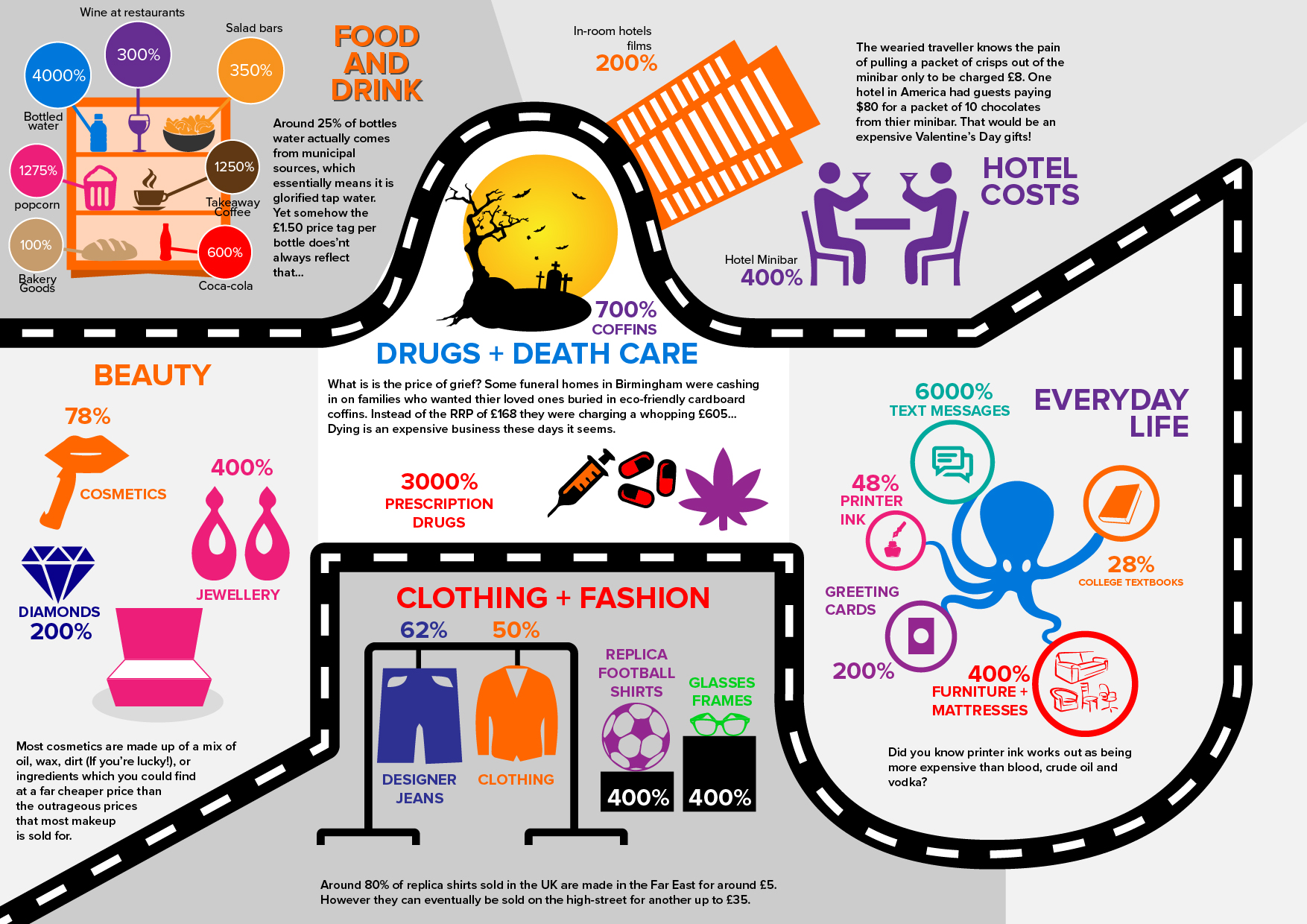
2015 infographic showing claimed product markups
Markup and profit margin are different
Markup compares the difference between selling price and purchase cost with the purchase cost. Gross margin compares that difference with the selling price. If an item costs £5 and sells for £10, its markup is 100%, while its gross margin is 50%—before delivery, marketplace fees, packaging, tax, returns and other business costs.
That is why a large claimed markup does not by itself mean a large net profit. The costs and sales volume behind a product matter as much as its shelf price. Treat the figures in our old infographic as conversation starters, not current sourcing advice.

Check the numbers for your own stock
For any lot you plan to resell, divide the total landed cost by the number of saleable units, compare recent sold prices and allow for fees and unsold items. You can use this approach when browsing our current one-off wholesale job lots. Each advert gives the details needed to assess that particular batch; no margin is guaranteed.
Archive note: This article and its infographic were first published in 2015. The original percentage claims have not been revalidated for 2026.
Comments are closed.